
By bringing the science and cultural insights of human thriving to life for leaders, teams, and brands, Wisdom Works is transforming how we live and work.
FOSTER WORK CULTURES WHERE EVERYONE THRIVES
Our customized programs, enterprise solutions, and practical resources harness the latest wisdom and science of thriving to help you achieve sustainable results while staying energized, fulfilled, and well.
Learn More
UNLOCK TRUE POTENTIAL FOR IMPACTFUL CHANGE
Our cutting-edge assessment Be Well Lead Well Pulse® measures 19 key bio-psycho-social factors of thriving, empowering you to turn insights into sustainable action for your teams and organizations, starting with yourself.
Learn More
Lead with the Wisdom & Science of Thriving
From a foundation of wellbeing, we build meaningful relationships and achieve our goals while enhancing our wisdom and resilience.
This is how we thrive.
And it’s not just leaders who experience these results. Research shows that thriving is linked to:
> Enhancing adaptability, innovation, & learning
> Boosting cognitive agility & performance
> Fostering prosocial mindsets & behaviors
> Improving employee attraction & retention
> Cultivating vibrant work cultures
> Building customer loyalty
> Driving profitability
> Increasing responsibility for people & planet
Simply put, thriving is essential for creating healthy, sustainable, and adaptable organizations.
JOIN THE THRIVING GENERATION OF LEADERS
A worldwide movement creating a new standard of thriving at work, at home, and in all walks of society.



See results with our science-based platform of assessments, education, and culture change resources—Be Well Lead Well®.
We are building a global movement of leaders passionate about creating environments where everyone can thrive.
Our Clients and Partners



















Latest News and Articles
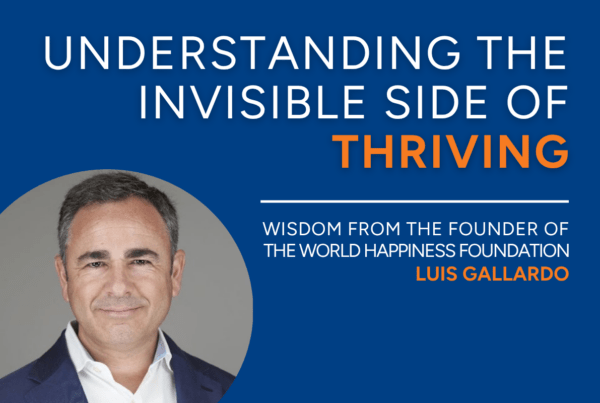
One of the privileges of my work is having conversations with people who are asking expansive questions about the future of humanity. Recently, I spoke with Luis Miguel Gallardo, former Managing Director of Global Brand & Marketing at Deloitte and Founder & President of the World Happiness Foundation. While our conversation covered many topics, from happiness and consciousness to systems change, one idea lingered with me long afterward: Can we truly understand human thriving without also understanding human suffering? WHY STUDY SUFFERING WHEN OUR GOAL IS TO CULTIVATE THRIVING? The answer, I believe, offers an important lesson for all of us. We’ve become remarkably good at measuring many of the conditions associated with thriving. Organizations monitor employee engagement, wellbeing, retention, productivity, innovation, and customer experience. Nations compare levels of happiness. Researchers continue to deepen our understanding of purpose, meaning, relationships, and psychological health. At Wisdom Works Group, we’ve identified a growing number of tools designed to measure human thriving across organizations, communities, and nations. These measures are valuable. They help us understand what contributes to a life well lived, and they transform how we define organizational and societal progress. Yet they also raise another question: What are we failing to…
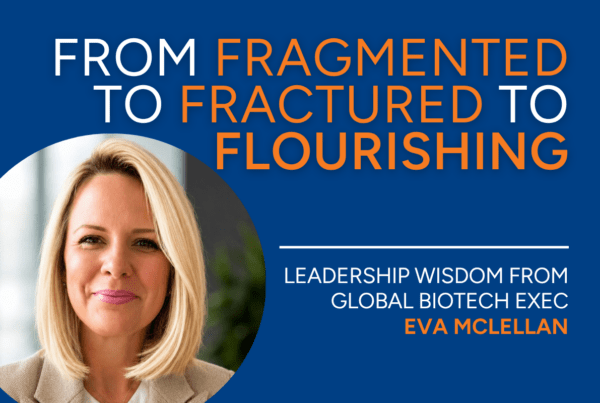
One of the great paradoxes of our time is that we are more connected than at any point in human history, yet many people feel increasingly disconnected from themselves, from one another, and from the larger systems they inhabit. As I work with leaders around the world, I hear this paradox expressed in many ways: a loss of trust, a diminished sense of agency, a longing for deeper connection, and questions about how to lead well in the middle of growing complexity and uncertainty. It also surfaced in a conversation I had with biotech leader Eva McLellan, who offered a distinction that I’ve been thinking about ever since. Eva shared that we’ve become accustomed to describing the world as fragmented. We see fragmentation in our organizations, our communities, our institutions, and sometimes even within ourselves. Yet she wondered if fragmentation is no longer the most accurate description of what many people are experiencing. Maybe, she suggested, we’ve moved into a period of fracture. For me, this raises the question: What is the deeper work of leadership in a fractured world? FRAGMENTED The world has always been complex. As Eva pointed out, it’s difficult to know whether our challenges are truly…
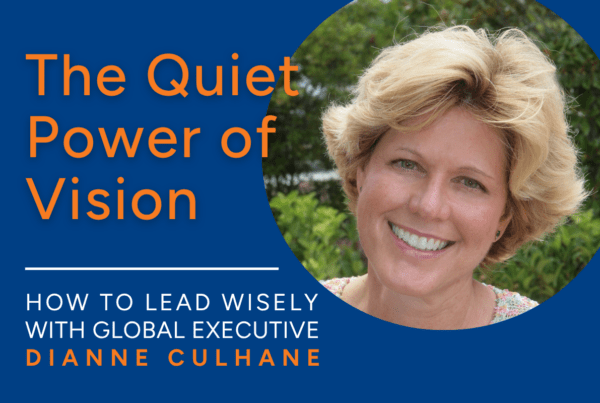
I recently sat down with longtime colleague and dear friend, Dianne Culhane, for a conversation about leadership, thriving, and the arc of a meaningful life. Over several decades, Dianne led large-scale transformation efforts at The Coca-Cola Company and later became deeply involved in developing the leadership strength of the College of Charleston. As we reflected on the experiences that shaped her life and leadership, I found myself returning to a central theme: the quiet but powerful role that vision has played throughout her journey. Dianne didn’t speak about vision in the conventional sense of an organization’s strategic plans, performance targets, or carefully engineered goals. She described something much more human and alive: an inner orientation toward possibility that often appeared long before she knew how it would unfold. Vision Often Arrives Before the Path Early in her career, Dianne identified three global companies she hoped to work for one day. She had no connections to them, no obvious path into them, and no clear strategy for how it would happen. She simply knew these were organizations she felt drawn toward. Years later, when someone at The Coca-Cola Company saw work she’d produced in a professional association competition, she was recruited into the company….
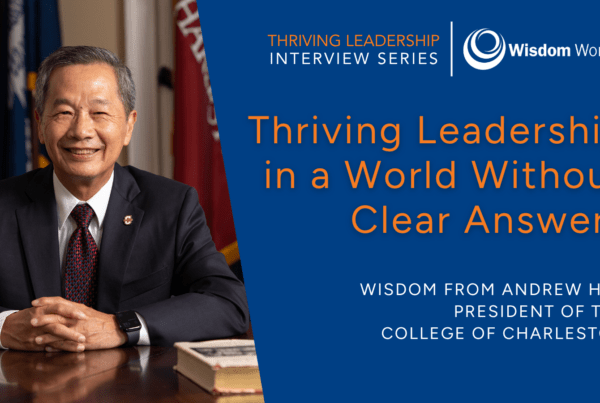
I often find myself returning to a question that feels increasingly urgent: What does it mean to thrive as a leader in a world that will not slow down or offer clear answers? Recently, I sat down with Andrew Hsu, President of the College of Charleston, to explore this question. His life journey, from growing up during the Cultural Revolution in China to leading a 250+ year-old U.S. institution, has given him a perspective on leadership that’s both hard-earned and deeply relevant. What he shared brought into sharp relief what thriving leadership looks like when it isn’t theoretical, but grounded, tested, and not dependent on things going well. THRIVING LEADERSHIP IS BUILT IN ADVERSITY, NOT DESPITE IT During the Cultural Revolution, Andrew grew up in a family that faced significant hardship. When I asked how that shaped him, he didn’t frame his experience as something to overcome or ignore. Instead, he spoke about three key qualities it cultivated within him: optimism, resilience, and humility—capacities that continue to serve him in life and leadership today. Many people equate the idea of thriving with ease—less stress, more balance between work and life, or a relaxing life at some indeterminate point in the future, such as retirement. But that’s not what I see in the leaders who are meeting this moment well. Thriving, at its essence, is an innate human capacity. And, as Andrew’s experience reflects, the internal resources that enable us to thrive are often forged in the very adversities we would not knowingly choose. For him, thriving is inseparable from learning and growth. And that begins with humility. He was clear: no one has the full answer. Yet, many leadership cultures still subtly reward the opposite—certainty, control, decisiveness, being the one who “knows.” That model may…